Hong Kong hosted two of Bitcoin’s biggest events this year on almost the same stretch of calendar. Bitcoin Asia and Bitmain’s World Digital Mining Summit ran in the same week, bringing together miners, builders, allocators and institutions from across the industry.
After spending time at both events both onstage and mixing with the crowds, here are my five biggest takeaways.
Hashrate is now something institutions will actually underwrite
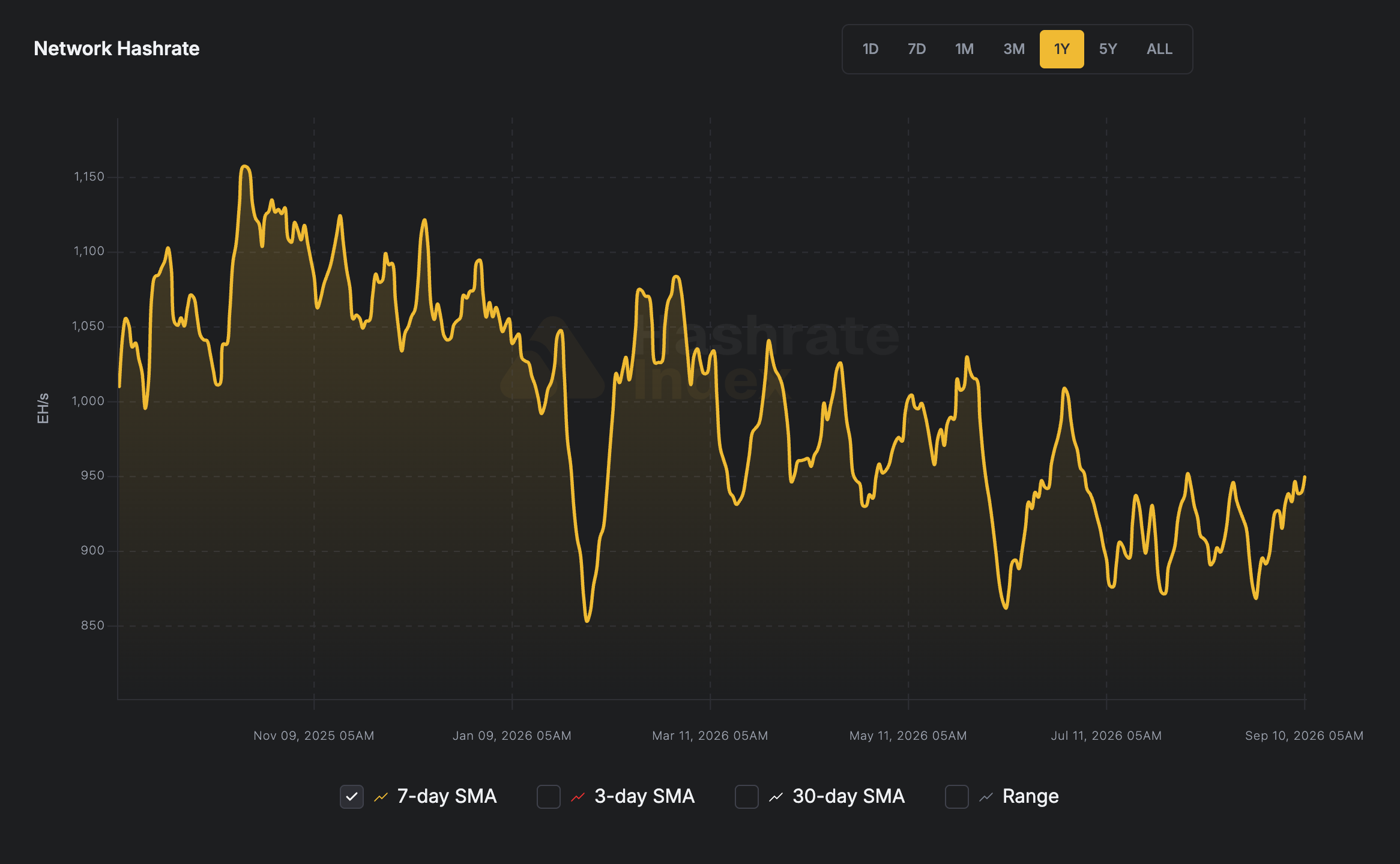
The story everyone arrived with was miners leaving for AI. Network hashrate is down 14% this year, the longest sustained decline on record, over 300 days. Over 70 billion dollars in AI and HPC contracts are pulling the largest miners’ power and capital away structurally, some targeting up to 70% of revenue from AI rather than mining, and that capacity isn’t coming back the moment hashprice recovers. It’s committed to long term infrastructure contracts.
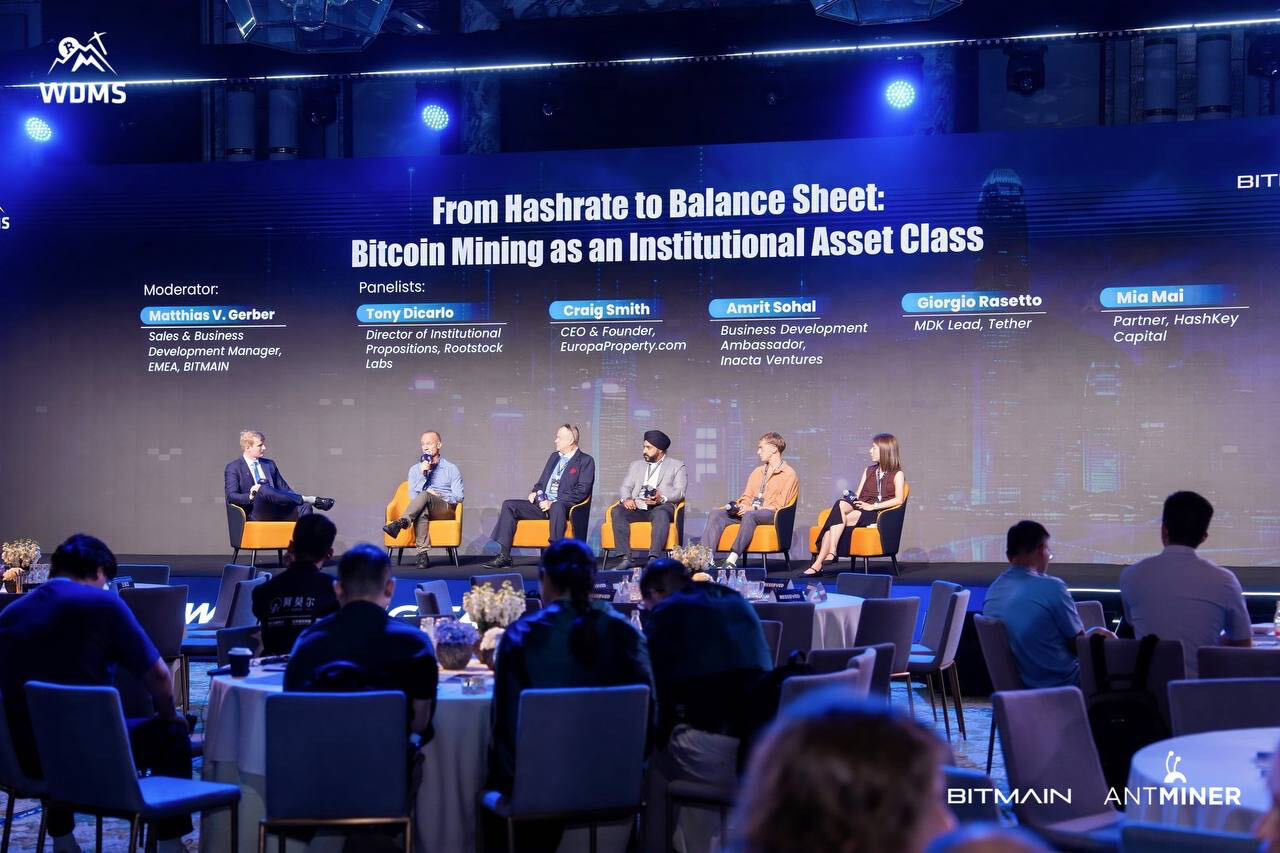
I spent my panel during Bitmain’s WDMS making the opposite case. Every unit of hashrate that leaves gets redistributed, through difficulty, to whoever remains. Same fleet, same spend, a bigger share of a fixed daily reward. That’s what makes this cycle different from 2022, the shakeout runs longer, but more importantly the window for a miner to grow share runs longer too – infact this could be the biggest growth window in nearly 10 years for a well capitalised miner to grow their hashrate market share.
What’s changed underneath that story is more interesting than the story itself. Hashrate has become real collateral. It only got there because Bitcoin itself is transparent, liquid, and priced around the clock, a lender can underwrite that in a way they can’t underwrite most physical assets. That’s exactly what we’re doing, credit backed by pledged hashrate, hardware, and Bitcoin, so miners can expand without selling a coin.
The hardware keeps compounding, even when the economics don’t
Bitmain didn’t wait for better conditions to push the technology forward. At WDMS, they launched the Antminer S23 XP Hyd, running at 8.9 joules per terahash, the first Antminer flagship ever to break under 9. Bitmain’s own first ASIC, the Antminer S1, ran at roughly 2,000 joules per terahash in 2013. Their newest runs at 8.9. That’s over a decade of relentless efficiency gains, delivered straight through a hashprice squeeze that would have stalled a less mature industry. The innovation in the mining sector never ceases to astound me.
Bitcoin Asia made one thing clear: all Bitcoin yield is structured
On the Bitcoin Asia panel, the moderator put it plainly, Bitcoin has no native organic yield, nothing like Ethereum’s proof of stake. He was right. There’s no protocol paying you to hold it. Every unit of Bitcoin yield in this industry is built, not earned passively.
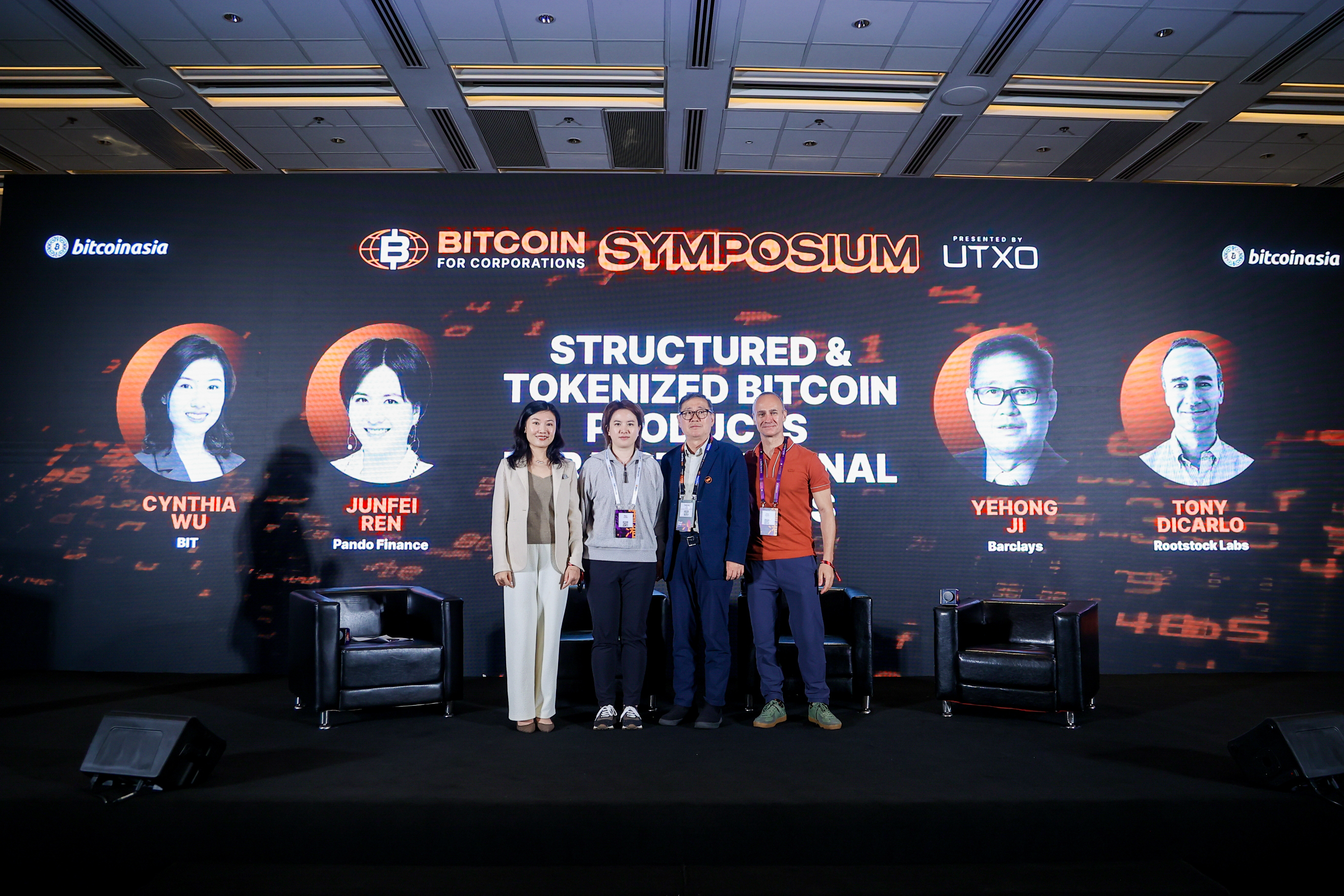
That reframes the actual question. It isn’t whether Bitcoin yields, because it clearly can. It’s whether the structure behind it is clear enough on yield, on operations, and on custody to actually fit and clear an allocator’s mandate.
With that in mind, I walked through some of the strategies we look at holistically when it comes to monetising Bitcoin. Overcollateralized lending, where you keep the upside. Regulated custodian integration, so custody sits with a provider you already trust while the capital still works. Structured, conservative strategies instead of leveraged farming. And then the paths sourced directly from Bitcoin’s own economy, hashrate generating yield through its own activity, and miner growth loans where the loan and the interest are both denominated in BTC.
The takeaway from the room wasn’t excitement about any single product. It was allocators asking harder questions about auditability than about headline yield. That’s a healthier market than the one that existed two years ago, even if it’s a less exciting one to pitch.
Merge mining is the cheapest option nobody’s exercising yet
This one came up more than I expected. Merge mining Rootstock today pays a miner meaningfully less than Bitcoin L1, and it’s honest to say so, it’s not paying anyone’s power bill. But it’s pure margin at zero marginal cost. No extra watts, no capex, no impact on Bitcoin rewards. Same ASIC, same hash, an extra stream sitting on top of what’s already being earned.
The reason it matters more than the current number suggests is the next halving, and this part isn’t a forecast, it’s arithmetic. Block reward drops from 3.125 to 1.56 BTC in April 2028. Fees today make up under 1% of total miner revenue. Cut the subsidy in half and change nothing else, and that share doubles overnight, purely from the denominator shrinking. Grow transaction fees or merge-mining revenue at all on top of that, and it compounds further.
That’s not a marginal shift, it’s the underlying structure of miner revenue changing, and it starts the moment the halving hits, not after. A decade of mining has been optimised around one thing, subsidy plus efficiency. What sits outside the block reward is about to matter in a way it never has, and miners who haven’t started exploring that side of the equation yet are behind, not early.
Merge mining is the cheapest place to start. Zero marginal cost, no extra watts, no capex, no impact on Bitcoin rewards. If a pool already merge mines, a miner is already exposed to this shift. If a pool doesn’t, integrating it is straightforward.
Regulation is closer than a year ago, still not close enough
Regulation came up on every panel I sat on. CLARITY Act passage on prediction markets is under 20% now. Long odds this year was the consensus. Better odds over the next two was the caveat that followed almost every time it came up. Longer dated markets put it near even odds by 2028, and the read I kept hearing on why, it isn’t crypto firms lobbying hardest for this anymore, it’s the banks. The American Bankers Association sent over 8,000 letters to the Senate in a single week. The incumbents need this more than the industry does, and that’s usually what eventually gets a bill unstuck.
The other point that kept resurfacing, none of that means nothing happens meanwhile. Both the SEC and CFTC chairs have said they’ll write crypto rules without Congress if they have to, and that got raised more than once as a genuine reassurance, not a consolation prize. What guidance can’t do is divide their jurisdiction the way a statute can, and it’s easier for the next administration to unwind, that distinction was the one regulatory conversations kept circling back to.
The one clearly optimistic note in the room. Bitcoin already has one of the broadest, clearest asset classifications globally, arguably clearer than some currencies. Whatever happens to CLARITY, the sense across both panels was that Bitcoin’s own financialisation will be affected less by the delay than the rest of the digital asset market.
Where this leaves things
None of what happened in Hong Kong needed a bull run to happen. Hardware kept improving through a squeeze. Lenders kept underwriting hashrate through a shakeout. Builders are still actively building and allocators kept showing up asking sharper questions, not fewer of them. That’s usually the signal worth paying attention to, not the price on the day.